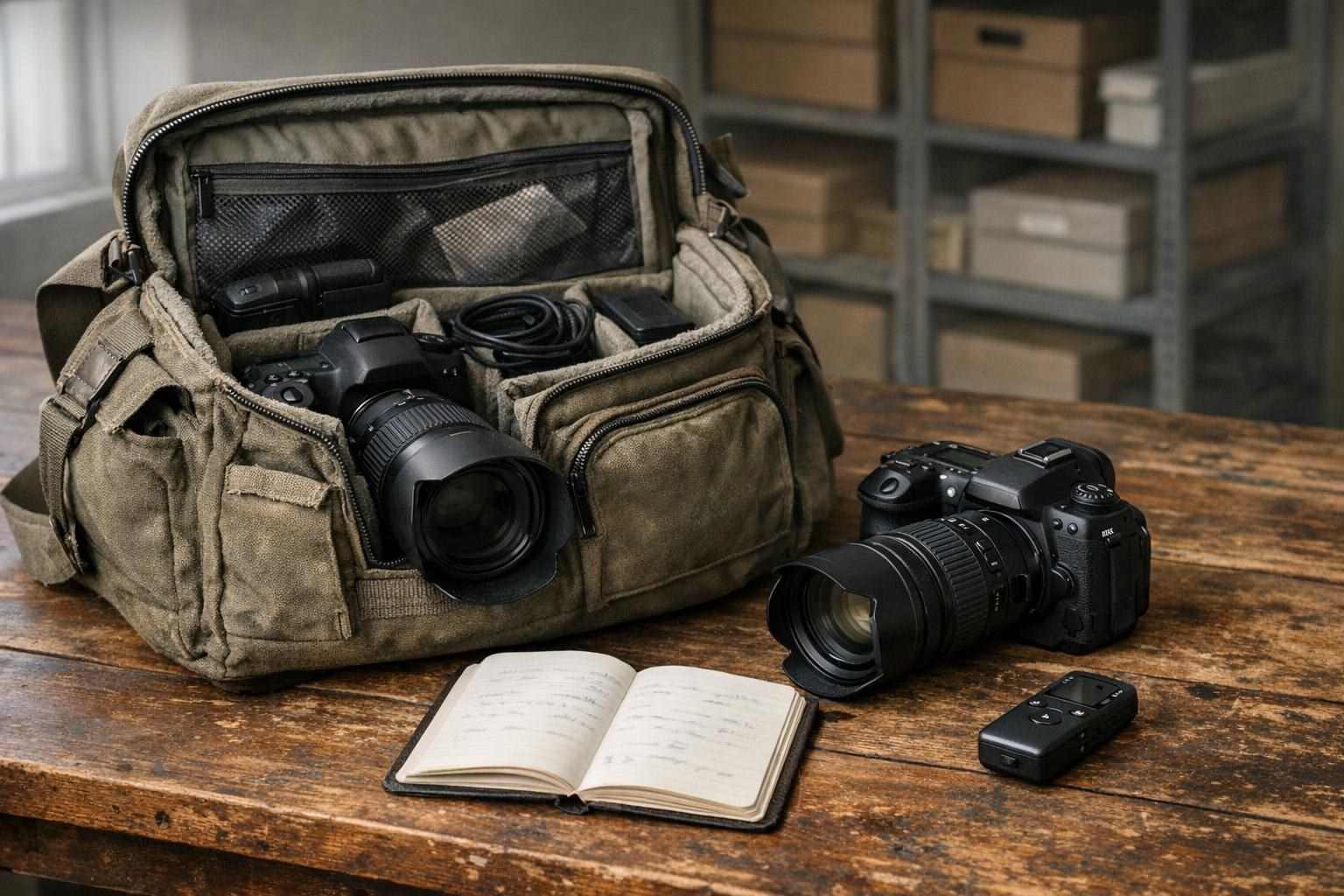
A field photograph as it is deposited in an archive is not a standalone object, but rather the end result of a whole series of choices, among them which shot to include, when it was taken, what the photographer knew and what s/he did not know. A simple caption card, notebook page or voice message accompanying the photographer in the field can later become as important as the actual photograph.
This document also has an object biography. The above-mentioned practical problems with memory in the field (memories fading with time, scenes changing etc.) can be overcome with the simplest of means. Yet this simple document later has a huge impact upon others such as the picture editor, the archivist, the publisher etc. Eventually it also tells the ethnographer and historian how this document was constructed.
The problem that created the caption card
Information from the visual field gets accumulated in the head of the photographer at a pace that the human brain cannot process. This means that a face might be remembered, but not the name to it, a street maybe, but not the district, the main event of course but not the sequence of the events as they unfolded. The image files contain information about the exposure settings that were used to take the pictures, but generally not much more than that.
It is important to note that a caption card serves the first purpose of a file, that of controlled recall. Therefore a useful note will distinguish between what has been directly observed by the photographer and what has been supplied by a source (or other information) and subsequently added to by the archivist.
For war photography or other high-risk documentary photography, the context can sometimes even pose a risk to people involved in the image. Even a precise location, the identity of people depicted in the photographs or a description of injuries they suffered can be harmful if released carelessly. However, recording such information is important for later decision-making.
Designing a record that survives a hurried day
While in the field we work with whatever is available to us. A pocket notebook, printed caption sheet, a phone note, or even audio recording all work well, as long as we stick to a consistent system and have room to write down our information.
Minimize the information recorded in a field note and create a working frame reference. The working frame reference includes: a) working frame reference #; b) date photographed; c) time approximately photographed; d) location(s) photographed; e) subject(s) photographed; f) event(s) photographed; g) source(s) of account(s) photographed. Include name of photographer in field note if archive contains work by more than one photographer.
A useful page for a record of caption information has two layers: first the immediate field information in short phrases, names as they were heard, all visible information and reminders of things to verify. The second layer is the editorial expansion of this raw information, where more space is allowed for the same information and the evolution of the information is clear.
What the lens sees, and what the photographer knows
Captions that focus too much on surface description ('People near a damaged building') are not very useful, since they do not explain why the picture was taken in the first place. Much better is a description that explains the relation between the image and the situation that it captures: the events that preceded the taking of the photograph, who told the caption-writer what happened, and most importantly, what the image cannot tell.
The term 'soldier' or 'fighter' can be used incorrectly to describe a resident, a passer-by, a volunteer or even someone with connections to the event. A label of 'civilian' can also be misleading. Words like these must be used with the utmost care and be cross-checked against other information available. If in doubt, it is always better to list possibilities than to risk an inaccurate description of someone.
Write out your field observations and notes in the simplest form first. Then when you expand out on the caption, cross reference to your original notes so you know where you got the info from and are able to give due credit. Also ensure you describe what you saw, don't make interpretations along the way. This will help with future editing and with research into your work.
From notebook line to digital metadata
Capture and archive information as are separate fields of metadata. A caption, a headline, a description, a location, a date, the name of a creator, information about rights – all these serve different purposes. Storing them in a single long text field is not useful for later search and use.
In making sure the image is stored in files with stable and consistent file names to enable searching, we do not substitute naming for meaning. We keep the original files of all image versions (originals, edited, final etc) and corresponding field notes in all formats in which they were written (hard copy, audio etc).
Note that some metadata will necessarily be unknown. It is far better to indicate that information is missing than to make something up. It is also worth noting that there are currently no algorithms able to strip embedded metadata from images. Rather, these images are exported with the metadata removed, a copy of which is made to a companion file (of notes) for future reference.
The archive as an edited chain of custody
Furthermore, a photograph can change much when it is being distributed by several individuals. As information is added by each of them, the context of a photograph can change too. Thus it is very important to keep track of all the stages of distribution of a photograph by recording the date of every change and by naming the individuals who were responsible for these changes and for the verification of the added information.
Translate captions into all languages in which your archive is designed to operate, and include the original words in an 'edited by' note below the caption. Details of how a name was spelled, and by whom, are best recorded in the 'editor' field.
Access to a file archived as an image or document can be restricted at a later date. Published images may have faces and / or bodies of individuals in them blocked out. When determining access to a recorded image and accompanying information, archived files should be reviewed against current requirements and ethical standards, including Terms and Conditions of access to an archive, official requirements for consent, etc. and against information recorded at the time as to identifying information etc.
What the small record leaves behind
Often the caption card is not printed out and so goes unnoticed. But in fact this humble document can tell a lot about how the photographs have been used. It can point out the mistakes that have been corrected, link together photographs taken at the same time, highlight an archive's silences.
Good context does not make a photograph more objective, it makes the conditions of viewing more obvious. The photograph remains an encounter, which is determined by the position of the photographer, by the time of the shot and by the selection that he or she makes. The accompanying documentation provides the reader with the best information as to what the photographer knew when he or she took the photograph.
There is one simple question that you need to ask of any field photograph before you archive it: what would a careful stranger need to know in order not to misunderstand this image? This and the related points about facts and inferences and uncertainties need to be in the text beside the image, written in plain language, and distinguished from one another.