A small card in a photographer's bag can matter more than an extra lens. It may list emergency contacts, blood type, language notes, a newsroom number and someone to call if the photographer is detained, injured or separated from the group. It is unglamorous preparation, but fieldwork often turns on details that never appear in the finished frame.
Documentary photography is often described as being in the right place at the right time. Conflict reporting complicates that idea. Strong images depend not only on timing but also on permissions, local knowledge, redundant files, clear boundaries and decisions made before pressure narrows the available choices.
The myth of instinct under pressure
Instinct matters, but it cannot replace a plan. In an unstable environment, a photographer may have seconds to decide whether to keep working, leave, protect a source or stop recording. Those decisions are easier when practical thresholds have been considered in advance: what signs mean it is time to leave, which routes require local verification, who knows the photographer's movements and what information must not be stored on a device.
A plan can be revised, but it is harder to create one after communications fail or a crowd changes direction. Physical bravery is not the central professional virtue. Photographs do not become more truthful because a photographer accepts unnecessary exposure. Risk that adds no reporting value is usually poor judgment, not commitment to the story.
Read the assignment before reading the light
Field conditions begin with the assignment's purpose. Covering displacement, a demonstration, a damaged neighbourhood or an armed conflict may involve different risks and obligations. The visual approach should follow the reporting question rather than the drama of the location.
Before departure, clarify who commissioned the work, how images will be edited, what identifying details may be published and who is responsible for legal or security decisions. For independent work, create a written contact plan and explain the intended use clearly. Local knowledge is more than translation: residents, fixers, drivers, reporters and community organisations may understand access and social tension in ways invisible to an outsider. Their advice is not a safety guarantee, and they should not be exposed casually in captions or metadata.
Build a kit around failure, not novelty
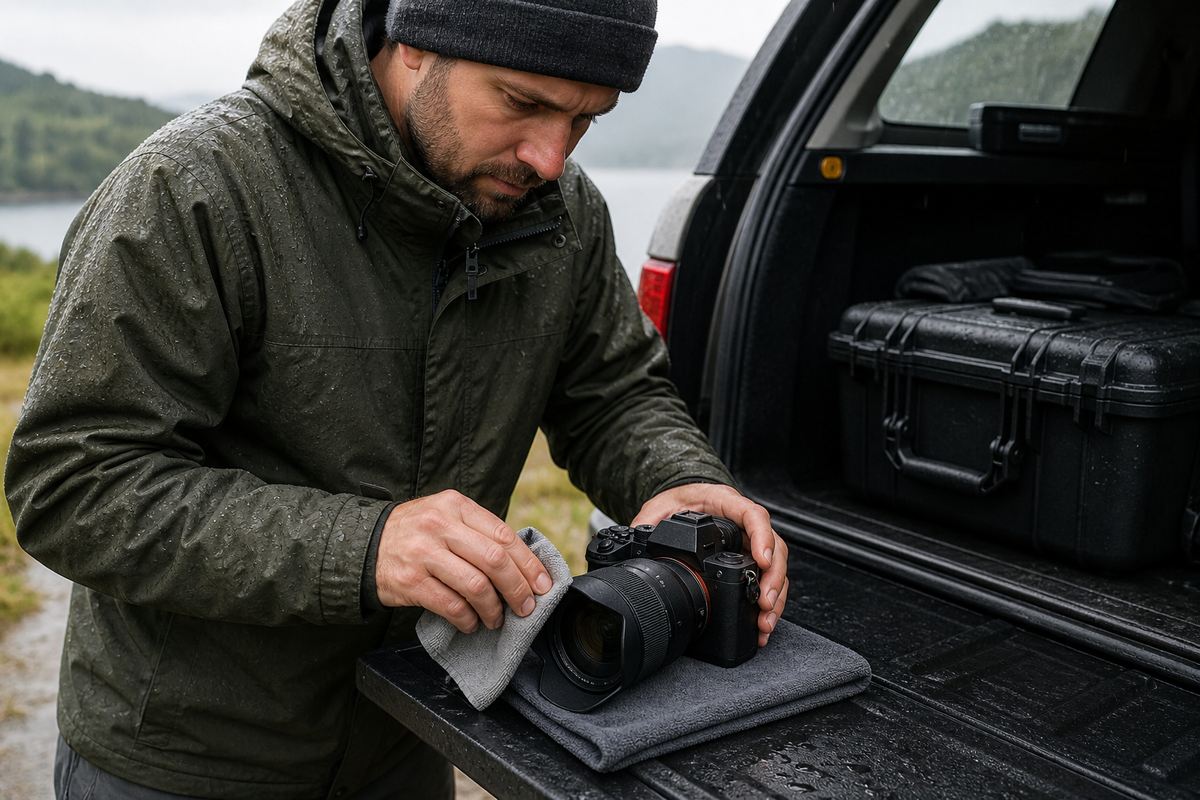
A field kit should answer one question: what happens when an essential component fails? A second storage path may be more useful than a marginal increase in resolution. Spare batteries, weather protection, cleaning materials, a torch, water, basic first aid and paper contact details support work when power, signal or transport becomes unreliable.
Match equipment to the environment and assignment. In dust, rain, cold or heat, access to the camera matters more than a long list of accessories. Clothing should allow movement without drawing unnecessary attention. Protect identification, press credentials and travel documents, checking current requirements against official guidance and trusted local sources.
Digital security belongs with physical preparation. Use strong device protection, minimise sensitive data and consider what images, messages or location records could reveal if a device is inspected or lost. Do not assume deleting a file removes every copy. The safest data plan reduces harm without making accurate reporting impossible.
Make safety decisions before the frame
Ask whether the expected reporting value justifies the foreseeable risk to the photographer, sources, bystanders and colleagues. If the answer depends on a subject being unable to refuse, a crowd remaining calm or an exit staying open, the risk is not controlled enough.
Distance can be an ethical tool as well as a physical one. A longer lens, wider composition or decision to wait may preserve context without increasing pressure on a vulnerable person. In a tense gathering, avoid blocking movement, provoking attention or placing someone between opposing groups merely to improve composition.
Safety also includes medical and psychological preparation. Know how to communicate an emergency, where professional medical help may be available and what support exists after difficult coverage. Laws concerning credentials, recording, border entry, drones, encryption and public photography vary by jurisdiction and may change. Check current official requirements before travel; general guidance is not legal advice.
Consent is a process, not a single question
Documentary work often involves people with limited control over their surroundings. Consent may be impossible at an immediate public event, but that does not remove the duty to consider dignity, foreseeable consequences and the difference between editorial value and voyeurism.
When someone is identifiable and the situation is sensitive, explain the intended use as plainly as circumstances allow. Be especially cautious with children, injured people, detainees, grieving families and anyone whose legal or social position could worsen after publication. A technically lawful image can still be ethically damaging.
Captions should distinguish observation from assumption. Record names, dates, locations and sources while details are fresh, then verify them before publication. Do not use a dramatic caption to supply certainty that the photograph cannot support.
Let the archive challenge the first impression
The strongest visual story is not always the most graphic frame. A sequence can show preparation, waiting, movement, aftermath and ordinary life around an event, helping viewers understand conditions rather than consume a single moment as spectacle.
Review contact sheets with the original question in mind. Which images establish place or consequence? Which repeat a familiar stereotype? Which depend on an unverified assumption? A photograph can be visually persuasive and factually incomplete at the same time.
Photographers cannot control unpredictable conditions, and preparation cannot remove danger, ambiguity or loss. It can preserve choices: to stop, protect a source, verify a caption, secure a file and make an image without treating another person's vulnerability as equipment.
Timing matters, but only when judgment makes the moment survivable, ethical and intelligible. The decisive act is often not pressing the shutter, but knowing what must happen before, during and after it.